
Paphos Real Estate: Complete City Guide and 2026 Market Data
Paphos sits on Cyprus's southwestern coast, combining one of the island's richest archaeological legacies with a property market that recorded the strongest apartment price growth of any Cyprus district through late 2025. The district draws heavily on international retirees, British expatriates and tourism-linked investment.
History and Development
Paphos was the ancient capital of Cyprus under Ptolemaic and Roman rule, and its Kato Paphos Archaeological Park, a UNESCO World Heritage Site, holds some of the finest Roman mosaics in the Mediterranean alongside the Tombs of the Kings necropolis. The city served as European Capital of Culture in 2017, an event that accelerated infrastructure investment along the seafront and in the old town. Modern residential growth has concentrated along the coast north and west of the city center, toward Coral Bay and Peyia.
Geography and Neighborhoods
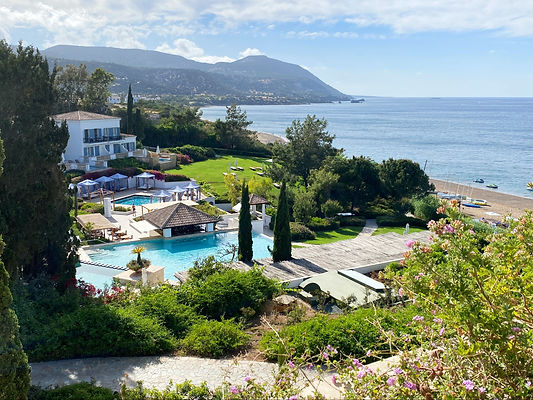
Kato Paphos, the coastal tourist and harbor district, anchors the city's hospitality and short-term rental market. Coral Bay and Peyia, further north, have become the district's premium residential zones, popular with British and Northern European buyers seeking villas and low-rise developments near the beach. The Tombs of the Kings Road corridor hosts much of the district's newer high-end apartment stock. Inland, Anavargos, Tremithousa and Mesogi offer more affordable, family-oriented housing with lower price points than the coast, while Geroskipou, east of the center, provides a mid-range residential and retail base close to the airport.


Economy and Lifestyle
Tourism and hospitality dominate Paphos's economy, supplemented by a growing retiree and lifestyle-buyer population, particularly from the UK, Scandinavia and Northern Europe. Neapolis University Paphos has added a modest student and academic presence in recent years. Paphos General Hospital and a cluster of private clinics serve the district's above-average share of long-term foreign residents, alongside international schools concentrated around Peyia and the coastal corridor.
Transport and Infrastructure
Paphos International Airport sits within the district, giving it direct international access without reliance on Larnaca's airport. The city connects to Limassol, and onward to the rest of the island, via roughly an hour's drive on the A6 motorway.
Price Growth and Levels
Paphos recorded the strongest apartment price growth of any Cyprus district in Q4 2025, with apartments up 13.6% year-on-year according to the Central Bank of Cyprus Residential Property Price Index, while the district's overall index growth had eased to 8.9% annually by Q3 2025 as house prices slowed to 7.4%. Pricing by area:
SegmentTypical price per m²
Kato Paphos seafront / Coral Bay €4,500 - €6,500+
Tombs of Kings Road / Peyia €3,200 - €4,500
Inland (Anavargos, Tremithousa, Mesogi) €2,200 - €3,200
Paphos accounted for roughly 20% of all national sales contracts by early 2026, among the highest shares of any district relative to its population size.
Rental Market
Gross rental yields in Paphos average around 4%, more modest than Limassol or Nicosia, reflecting the district's higher share of owner-occupier and holiday-home buyers rather than pure buy-to-let investors. Short-term holiday rental performance remains strongest in Kato Paphos and Coral Bay, tracking the district's tourism season.
Construction Activity and Buyer Demand
Paphos received 1,729 authorized new dwelling units in 2025, close to 11% of the national total and the smallest pipeline among Cyprus's three largest coastal districts, reflecting tighter coastal land availability relative to Larnaca and Limassol. Demand is dominated by retirees and lifestyle buyers, a large share of them British and Northern European, alongside a smaller but growing base of holiday-let investors drawn by the district's tourism infrastructure.
Outlook
Paphos combines the island's fastest apartment price growth with one of its most limited construction pipelines, a combination that has historically supported continued price momentum, though buyers should weigh this against more modest rental yields than Limassol or Nicosia.
Frequently Asked Questions
Is Paphos a good area for property investment in 2026? Paphos recorded the strongest apartment price growth in Cyprus through Q4 2025, at 13.6% annually, though its rental yields, at around 4%, run lower than Limassol or Nicosia.
What drives demand in Paphos? Primarily retirees and lifestyle buyers from the UK and Northern Europe, drawn by the district's coastal setting, archaeological heritage and tourism infrastructure, alongside a smaller base of holiday-let investors.
Which Paphos neighborhoods are most sought after? Coral Bay and Peyia lead for villa and low-rise coastal living, while the Tombs of Kings Road corridor concentrates the district's newer high-end apartment developments.